
Saint Joseph the Hesychast (1898 – 1959)
01.10.2020
Saint Joseph the Hesychast was born in 1898 in the village of Lefkes, Paros. At the age of 23, after a divine vision he saw, he renounced the world and went to Mount Athos, desiring to live a strict ascetic life. He was a man of prayer. The gift of unceasing mental prayer was given to him by the Virgin Mary, when he was still a novice monk.
They submitted, together with their eternal fellow ascetic, Fr. Arsenios, to Elder Ephraim, who had the hut of the Annunciation in Katounakia. For more peace, they withdrew to the Skete of Saint Basil. After the Elder's repose, he began his great ascetic struggles. He practiced fasting, vigils and prayer to the fullest. His main work was vigilance, the observance of the mind. Frequent and beloved spiritual states for the Elder were the rapture of the mind, the contemplation and the sight of the uncreated Light.
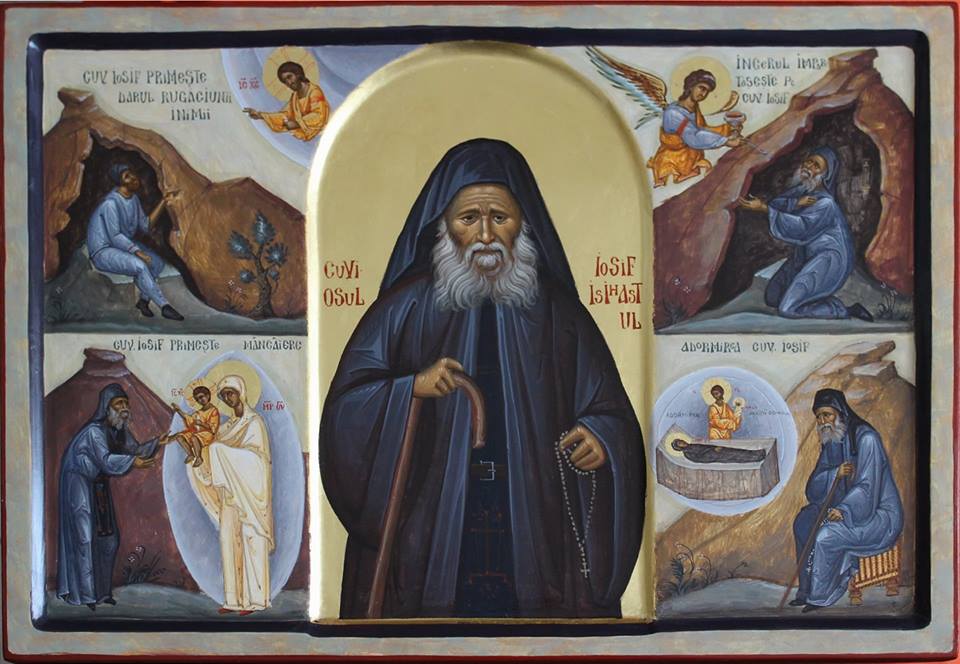
In 1938, together with Fr. Arsenios, he moved to the steep caves of Mikri Agia Anna. After divine information, in 1947, he acquired an escort. In 1951, they were transferred to the New Skete, to the hut of the Annunciation of the Virgin Mary, until his assumption, which occurred on August 15, 1959 (the feast of the Assumption of the Virgin Mary), while he had received information from the Virgin Mary, days before, that she would take him on Her feast.
The Saint lived in a period of decline of Mount Athos monasticism and Orthodox monasticism in general, which had been influenced by the social action of Roman Catholicism and the European Enlightenment. He reintroduced, with his empirical way of life, the teaching of Saint Gregory Palamas into Mount Athos monasticism. His presence as a genuine exponent of the Neptic Patristic tradition created a stream of arrivals to modern Orthodox monasticism. The spiritual fatherhood of six Holy Monasteries of Mount Athos and many others inside and outside Greece is today attributed to the blessed Saint Joseph the Hesychast.
The venerable Elder was unfortunate in worldly education, but he became wise in divine things because he suffered them. He became an experienced, discerning and unerring guide on the paths of spiritual life. He had the ability to analyze the complex and difficult-to-understand war of passions and demons, to penetrate and initiate into the mysteries of divine Grace those "desiring to be saved."